
Vaesen: City of My Nightmares – Review


City of My Nightmares is Vaesen stepping out of the woods and into the gaslit arteries of 19th‑century Stockholm and the shift feels both bold and inevitable. Free League has always treated their settings as a living organism, but here the city becomes a full‑fledged character: crowded, restless, and humming with unseen things that slip between the cracks of modernity. The campaign’s four linked mysteries span roughly a year in‑game, and that long arc gives the book a sense of breath and weight. Instead of the isolated dread of rural folklore, you get a metropolis where history, industry, and myth grind against each other like tectonic plates. It’s urban horror with a folkloric pulse, and it lands beautifully.
The campaign’s author, Kiku Pukk Härenstam, opens with a personal reflection on Stockholm’s libraries and childhood wonder, an unexpectedly intimate preface that sets the tone for the entire book. That affection for the city radiates through every chapter. Stockholm isn’t just a backdrop; it’s a labyrinth of archives, islands, salons, alleys, and political tensions, all rendered with a historian’s eye and a folklorist’s imagination. The inclusion of real figures like Carl Linnaeus and August T. Lysander, reframed through Vaesen’s mythic lens, grounds the supernatural in a world that feels lived‑in and plausible. The result is a campaign that blends fiction and historical reality with the same deftness that made the core book so compelling.

Structurally, the four adventures form a rising spiral of intrigue. Scent of a Killer begins with grisly murders and a city on edge, pulling the Society into a mystery that quickly reveals deeper roots. Song to the Moon shifts the action to Goose Island for a clandestine conclave of those who understand the old pacts with the Vaesen, an elegant escalation that widens the campaign’s political and supernatural scope. The Haunted Library is the standout for me: a descent beneath the National Archives into a hidden chamber only those with the Sight can find, tying the city’s intellectual heart to its mythic underbelly. And the final chapter, City of My Nightmares, brings everything back to Stockholm in full upheaval, culminating in an encounter with the ghost of Linnaeus that feels both eerie and strangely poignant. Each mystery is playable in two to three sessions, but they breathe best when you allow downtime and side‑stories to settle between them.
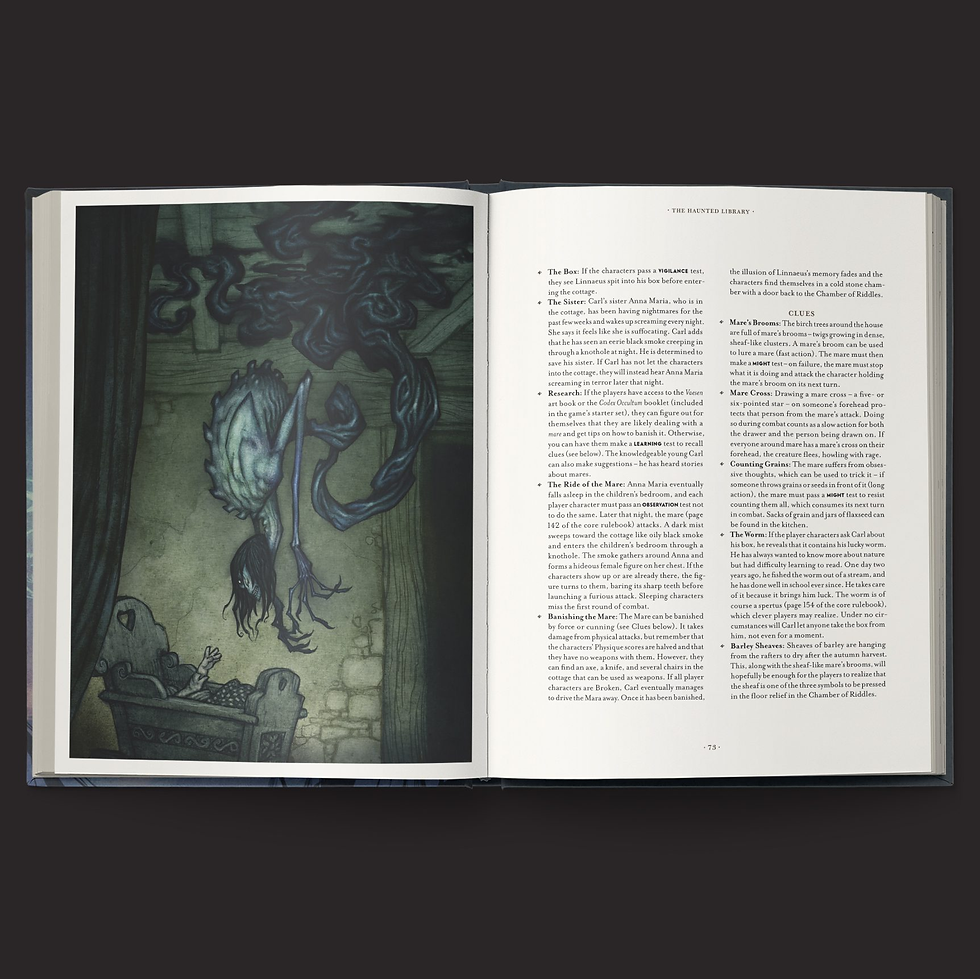
Visually, the book is another Free League triumph. Johan Egerkrans’ art remains the soul of the line, haunting, textured, and steeped in Nordic melancholy while Anton Vitus’ NPC portraits add personality and narrative clarity. The mix of new illustrations, historical engravings, and period‑appropriate prints gives the book a tactile sense of place. The included handouts are exceptional: letters, clues, train tickets, and especially the A2 map of Stockholm with a full newspaper printed on the reverse. It’s the kind of physical ephemera that instantly elevates a table’s immersion. Nothing feels like filler; every page earns its place.

What impressed me most is how City of My Nightmares reframes Vaesen’s core themes without losing the game’s identity. The shift to an urban environment could have diluted the folkloric tone, but instead it sharpens it. The Vaesen feel even more alien when they’re stalking opera houses, industrial docks, and political salons. The campaign leans into investigation, social tension, and moral ambiguity rather than monster‑of‑the‑week encounters. It’s a natural fit for groups who enjoy Call of Cthulhu‑style mysteries or the slow‑burn dread of CHILL, and the writing respects players enough to let them navigate complex NPCs and layered motives. Stockholm becomes a pressure cooker where tradition and modernity collide, and the Vaesen slip through the fractures.
There are minor pacing moments where a GM might want to tighten transitions or expand connective tissue between chapters, but nothing that undermines the campaign’s momentum. If anything, the structure invites customisation, slotting in other mysteries, weaving in character arcs, or letting the city evolve as the year passes. Purists who prefer Vaesen’s rural isolation may need a moment to adjust, but the payoff is worth it. This is the line’s most ambitious and emotionally textured campaign to date, and it deepens the lore of the Society in ways that feel meaningful rather than ornamental.
Pros
Stockholm is a phenomenal setting, richly detailed and treated as a living, breathing character.
Four‑part campaign arc feels cohesive, with each mystery escalating the stakes and deepening the lore.
Beautiful production values, including Egerkrans’ art, period engravings, and excellent handouts (especially the map/newspaper).
Urban folkloric horror hits a fresh tone, blending myth with politics, industry, and social tension.
Strong investigative structure, ideal for groups who enjoy layered mysteries and moral ambiguity.
NPCs feel grounded and memorable, with a mix of historical figures and original characters.
Cons
Pacing between chapters can feel loose, requiring a GM to add connective tissue or downtime scenes.
Less emphasis on rural folklore, which may disappoint groups who prefer Vaesen’s traditional countryside tone.
Some mysteries benefit from GM prep, especially when tying player arcs into the year‑long campaign.
Urban density may overwhelm new GMs, as Stockholm offers a lot of moving parts.

City of My Nightmares is, simply put, a standout addition to the Vaesen line. It's rich, atmospheric, and crafted with genuine love for both the setting and the genre. Whether you’re a veteran Keeper of Nordic horror or stepping into Vaesen for the first time, this campaign offers a gripping, beautifully realised journey through a city where history and myth walk hand in hand. Pour something strong, gather your players, and prepare to lose yourself in Stockholm’s shadows.
XPN Rating: 4.5 out of 5 (GOLD)


Comments