
Farlands - Xbox - Review


Farlands on Xbox doesn’t greet you with fireworks or a dramatic hook, it simply drops you onto a quiet, unclaimed planet and lets the silence do the talking. There’s a gentle confidence to the way it begins, inviting you to slow down, take a breath, and start shaping a world from scratch. What follows is a soothing blend of exploration, construction, and quiet routine, the kind of game that trades spectacle for presence. It’s not trying to dazzle you; it’s trying to settle you. And once its rhythm takes hold, Farlands becomes one of those rare experiences where the simple act of tending to a growing settlement feels genuinely rewarding.
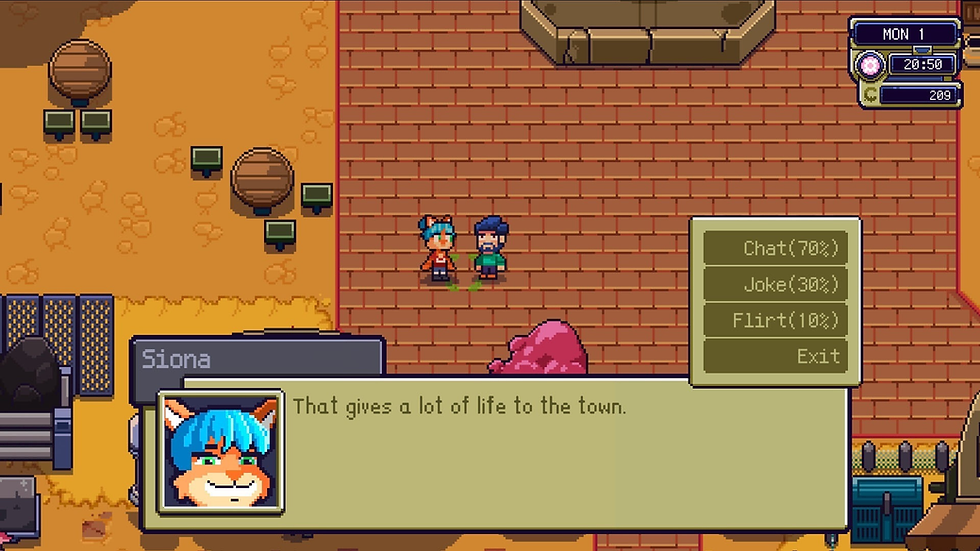
Farlands is built around a slow‑burn loop of exploration, gathering, building, and automation. You start with almost nothing: a small landing site, a handful of tools, and a planet that’s more empty than inviting. The early hours are all about carving out a foothold. You roam across the terrain collecting minerals, plants, and energy sources, gradually unlocking the ability to craft workbenches, storage, and basic production machines. It’s tactile in a way that feels good on a controller, scooping up resources, placing structures, watching your little patch of land start to look lived‑in.
Once you’ve established the basics, the game opens up into a more satisfying rhythm. Farming becomes a major pillar: planting crops, watering them, refining them into materials, and eventually automating whole chains so your settlement ticks along without constant micromanagement. Machines link into other machines, forming loops that keep your base humming. You’re not just building structures, you’re building systems, and the pleasure comes from watching them run smoothly.
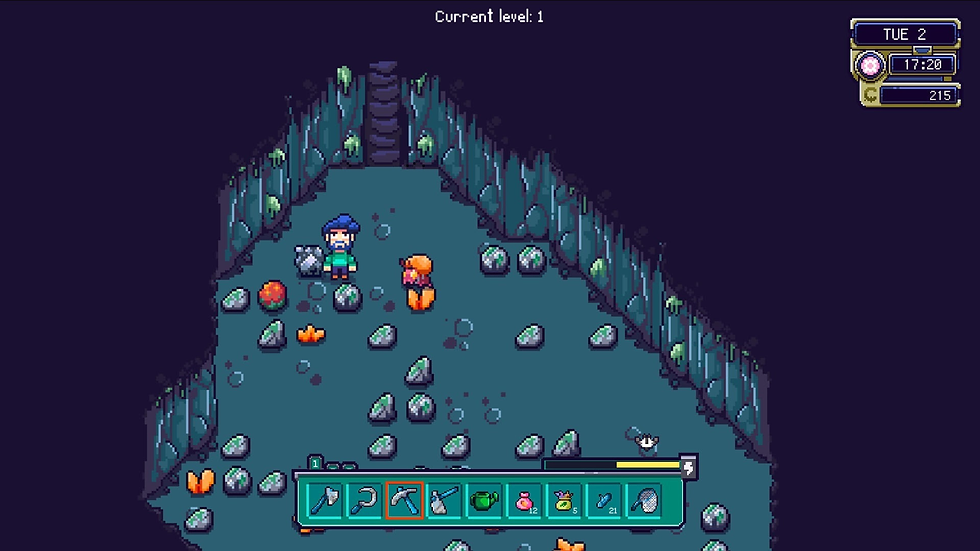
Exploration is gentle but rewarding. As you push further out, you discover new biomes with different resources and environmental quirks. Some areas are lush, others barren, and each one nudges you to adapt your approach. The planet feels like a puzzle box you’re slowly unlocking, and every new material you find feeds back into your crafting tree, opening up fresh tools, terraforming options, and more advanced tech.
Terraforming is one of the standout mechanics. You’re not just decorating a space, you’re reshaping the land itself. Flattening terrain, carving out paths, building platforms, and gradually turning a wild planet into a structured, functional home. It’s surprisingly relaxing, especially when paired with the ambient soundtrack and the slow drift of day into night.
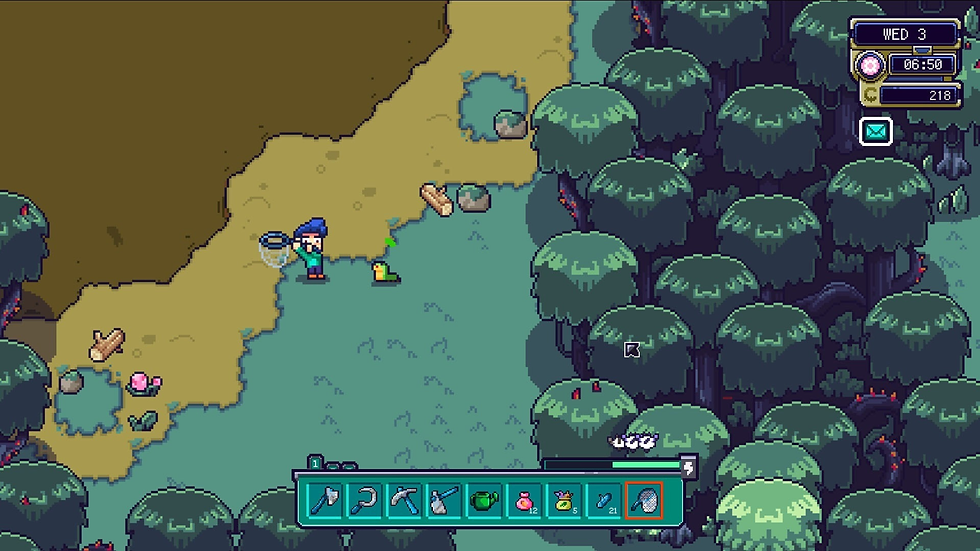
The pace is intentionally unhurried. There’s no combat, no looming threat, no ticking clock. The “challenge” comes from efficiency: how well you design your base, how neatly you automate your production lines, how cleverly you use the landscape. It’s a game that rewards curiosity and tinkering rather than mastery. And when everything clicks, when your farms are thriving, your machines are churning, and your settlement glows under a starry sky, it’s genuinely satisfying.
Where Farlands shines is in its atmosphere. There’s a quiet, almost lonely charm to wandering your growing settlement at dusk, watching lights flick on across the valley you built from nothing. The soundtrack leans into that mood with soft, spacey ambience that never intrudes. It’s a game that rewards tinkering, experimenting, and taking your time. On Xbox, performance is solid, with only occasional dips when your base becomes sprawling enough to resemble a small industrial city.

It’s not without its frustrations. The UI can feel clunky on a controller, especially when navigating dense menus or placing structures with precision. Some systems are under‑explained, leaving you to trial‑and‑error your way through early hours. And while the slow pace is part of the charm, players who crave narrative hooks or high‑stakes challenges may find the experience too gentle, too frictionless.
Still, Farlands has a magnetic pull. It’s the kind of game you boot up for “half an hour” and suddenly it’s midnight, your farms are perfectly optimised, and you’re planning tomorrow’s expansion. It’s cosy sci‑fi with a practical edge, less about saving the galaxy, more about making sure your irrigation system doesn’t collapse.

Pros
Beautifully atmospheric and relaxing planetary‑life sim
Satisfying progression loop with strong resource‑management depth
Terraforming and base‑building feel genuinely rewarding
Ambient soundtrack and day/night cycles create a great sense of place
Solid performance on Xbox even with large settlements
Cons
UI and menus can feel clumsy on a controller
Some systems lack clear explanation
Very slow pace may not suit players wanting narrative or urgency
Occasional performance dips in late‑game builds
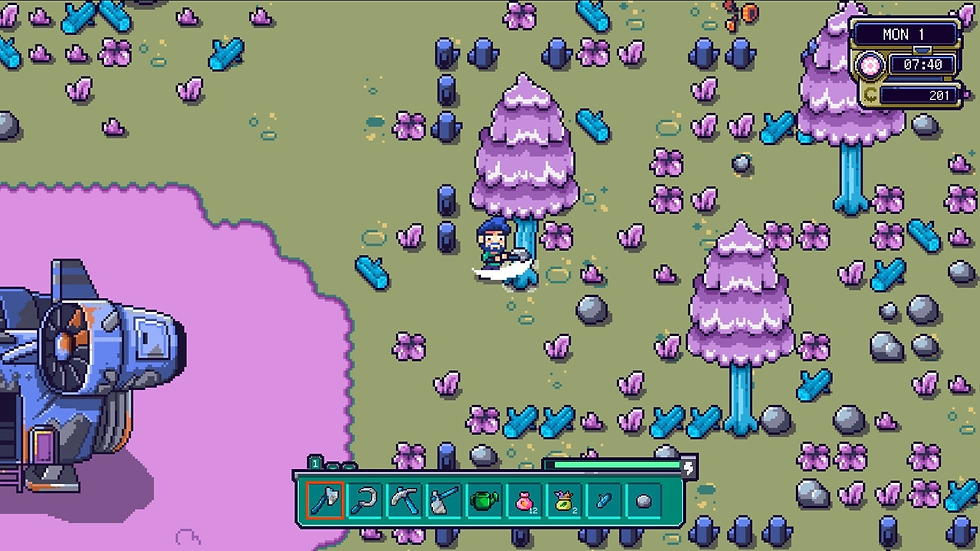
Farlands on Xbox settles into that rare space between cosy escapism and satisfying construction sim, offering a whole planet to slowly bend into shape at your own pace. It’s not loud, dramatic, or urgent and that’s exactly why it works. The pleasure comes from the quiet graft: laying out farms, linking machines, smoothing terrain, and watching your settlement evolve from a lonely outpost into a thriving ecosystem. The atmosphere is gentle, the progression is steady, and the sense of ownership over your world grows with every small improvement you make.
It’s a game that rewards patience and curiosity. If you enjoy tinkering, optimising, and building something meaningful over time, Farlands becomes a soothing ritual, the kind you return to for an hour in the evening and end up staying for three. It has rough edges, especially in its controller‑based UI and its hands‑off explanations, but the underlying loop is strong enough to keep you invested. Farlands doesn’t try to be everything; it just tries to be a calm, thoughtful planetary sandbox, and in that lane, it succeeds.
XPN Rating: 4 out of 5 (GOLD)

Farlands is available now!


Comments