
Blade Runner RPG: Replicant Rebellion - Review


Replicant Rebellion is a major expansion/sourcebook for the Blade Runner RPG, shifting the focus away from LAPD Rep‑Detect units and into the Replicant Underground, a decentralized network of rebels, smugglers, saboteurs, and sympathizers fighting for Replicant autonomy. It’s set in Los Angeles, 2037, one year after the return of Nexus‑9 models, and positions players not as hunters but as fugitives, activists, and insurgents. This isn’t just “more content.” It’s a thematic inversion of the core game.

Replicant Rebellion is the Blade Runner RPG at its most volatile, intimate, and morally charged. Where the core game leans into rain‑slicked noir investigation, this expansion pivots sharply into insurgent survival, reframing the entire experience around the Replicant Underground. Instead of sanctioned detectives navigating moral ambiguity from within the system, players become fugitives, activists, and saboteurs fighting from the shadows. It’s a thematic inversion that immediately changes the emotional temperature of the game: you’re no longer hunting Replicants, you’re trying to keep them alive.
The tone is darker, more political, and far more personal. Free League pushes hard into themes of identity, exploitation, and the cost of freedom, presenting Los Angeles 2037 as a city where every alley hides a threat and every contact might be an informant. The book’s lore section is one of its strongest assets, offering a detailed look at the Replicant Underground — its fractured cells, its ideological divides, its human sympathizers, and its militant Nexus rebels. It’s not just background flavour; it’s the emotional scaffolding that makes the campaign feel urgent and lived‑in. This lore is definitely “required reading” because it contextualises why rebellion is necessary and why it’s so dangerous.
The book’s lore section is one of its strongest components including:
Detailed history of the Replicant Underground
Factions, cells, and ideological divides
Human sympathizers vs militant Nexus rebels
How the movement operates in secrecy
The political climate of LA in 2037
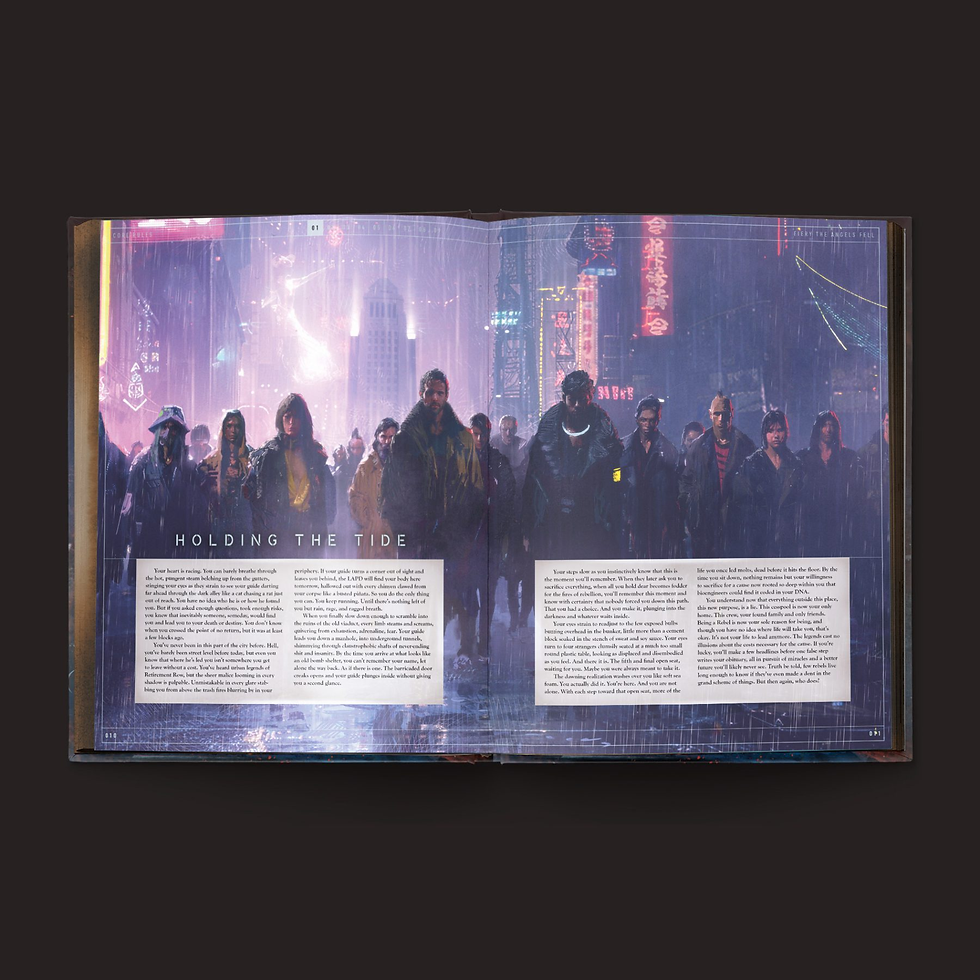
The new archetypes reinforce this shift in tone. Instead of polished LAPD roles, you get characters who feel desperate, improvisational, and morally compromised. Doctors patch up wounded rebels in basements. Powderkegs blow holes in corporate infrastructure. Powerbrokers negotiate fragile alliances in back rooms. Sirens manipulate their way through hostile social spaces. Street Rats survive by vanishing into the city’s cracks. Tanks stand between their cell and annihilation. These archetypes aren’t glamorous; they’re exhausted, hunted, and essential. They’re built for shadow operations, not casework, and they give the game a raw, human texture that the core rulebook only hinted at.
Mechanically, the standout addition is the Heat system, which tracks how much attention your cell has attracted. Heat rises through failed missions, violent actions, exposure, leaks, or simply existing as a Replicant in a hostile city. As Heat climbs, consequences escalate: raids, surveillance, informants, corporate retaliation. It’s a clever mechanic that injects constant tension into the campaign, making every decision feel weighted. The political framing can feel heavy‑handed, pushing players toward extreme positions rather than letting ambiguity breathe, but the system undeniably fits the setting. The one notable disappointment is that playing a Replicant still feels mechanically similar to playing a human. Given the thematic weight of Replicant identity, the lack of deeper mechanical differentiation feels like a missed opportunity.

The campaign content is substantial. Replicant Rebellion includes five full adventures and a framework for running an extended insurgency campaign. These missions lean into infiltration, sabotage, moral dilemmas, and the constant threat of discovery. They’re less about solving mysteries and more about surviving them. The structure encourages long‑form storytelling, where victories feel hard‑won and failures leave scars. It’s a different rhythm from the procedural pacing of the core game, but it’s a compelling one.
As always with Free League, the production quality is exceptional. The artwork is atmospheric and moody, capturing the neon‑drenched despair of the Blade Runner universe. The layout is stylish and cinematic, though the light text on dark backgrounds can be difficult to read over long sessions. It’s beautiful, but occasionally impractical.

Pros
A bold thematic shift that transforms Blade Runner from noir investigation into insurgent survival, giving campaigns a fresh emotional and narrative identity.
Rich, essential lore that finally fleshes out the Replicant Underground, its factions, its fractures, and its ideological tensions.
Atmospheric new archetypes that feel desperate, human, and lived‑in, perfectly suited to the rebellion tone.
The Heat system adds constant pressure and consequence, making every mission feel dangerous and meaningful.
Five full adventures provide immediate campaign value and a strong backbone for long‑form storytelling.
Stunning production values, with moody art and cinematic layout that deepen immersion.
Cons
Replicants still feel mechanically similar to humans, which undercuts some of the thematic weight around identity and embodiment.
Political framing can feel heavy‑handed, pushing players toward extremes rather than letting ambiguity breathe.
Bleak tone may not suit all groups, especially those who prefer the procedural calm of the core game.
Layout readability issues, with light text on dark backgrounds that can strain the eyes during long sessions.
Less suited to classic Blade Runner case‑file play, meaning some tables may feel like they’ve switched genres entirely.

Replicant Rebellion is a bold and emotionally charged expansion that transforms the Blade Runner RPG into a story of resistance, identity, and survival. It’s not flawless, the Replicant mechanics could be deeper, and the political tone may feel blunt to some groups, but it’s undeniably compelling. If you want Blade Runner with more danger, more narrative weight, and more moral complexity, this is essential. If you prefer the slow‑burn procedural noir of the core game, this expansion may feel like a different genre entirely. But for tables ready to embrace the chaos and vulnerability of rebellion, it’s one of Free League’s most evocative releases.
XPN Rating: 4 out 5 (GOLD)


Comments