
The Gate Must Stand - Review - PC STEAM

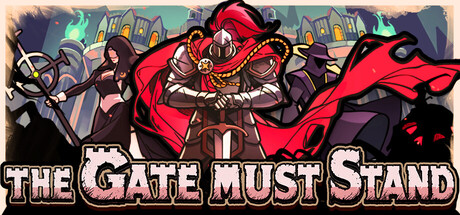
There’s a particular kind of tension that only tower‑defense hybrids manage to conjure that slow, creeping dread as you watch a line buckle, a barricade splinter, or a swarm begin to spill through a gap you swear you reinforced. The Gate Must Stand thrives on that feeling. It’s a medieval fantasy roguelite where you’re not just placing defenses from a safe vantage point; you’re right there in the dirt, hacking through demons while juggling upgrades, follower placements, and the ever‑looming threat of the city gate collapsing.
The pitch sounds chaotic: tower defense, survivors‑like auto‑attacking, real‑time tactics, hack‑and‑slash hero combat, randomized upgrades, relic‑driven progression. In practice, it’s surprisingly cohesive. You control a single hero who auto‑attacks while you reposition, kite enemies, and dash between lanes. Meanwhile, your “towers” are actually followers like mages, knights, guardians, who you level by stacking duplicates rather than placing traditional structures. Barricades let you funnel enemies into kill‑zones, and relics dropped by bosses evolve your defenders into powerful ultimate forms.

Runs last around an hour, split across three stages, and the pacing is intentionally slow unless you toggle the built‑in 2x speed. Every five minutes, a boss arrives to test your build, drop a relic, and force you to rethink your strategy. Defeat is expected and even useful, since each failed run feeds into meta‑progression that unlocks new skills, followers, and permanent upgrades.
When the game hits its stride, it’s genuinely engaging. The synergy‑hunting is addictive: stacking ice mages into a freezing wall, pairing guardians with damage‑boosting relics, or building a lane that melts enemies before they even reach your hero. The battlefield becomes a noisy, chaotic spectacle of spells, projectiles, and swarming demons, and the moment‑to‑moment decision‑making keeps you locked in.

The developers are clearly committed to supporting the game, rolling out frequent patches, balance tweaks, and even art revisions after community feedback. For a budget title, the responsiveness is impressive.
The game’s biggest weakness is its lack of personality. Belrak, the besieged city you’re defending, never feels like a place, just a backdrop. Heroes have no real identity, and the world‑building is minimal. The art style, while functional, doesn’t leave a strong impression, and the soundscape is serviceable rather than memorable.
The UI leans heavily on dense text, making upgrades harder to parse than they should be. Some descriptions feel overly long or unclear, and the sheer volume of sub‑upgrades can make the system feel bloated rather than deep. Performance can dip when the screen fills with enemies and spell effects, and barricade pathing occasionally causes enemies to get stuck. None of these issues break the game, but they do chip away at its impact.

Pros
Strong hybrid gameplay loop combining tower‑defense, survivors‑style auto‑combat, and hero‑driven action.
Satisfying buildcrafting with follower stacking, relic synergies, and evolving lane strategies.
Good pacing across runs, with bosses every few minutes that force meaningful adaptation.
High replayability thanks to roguelite progression, unlockable followers, and multiple difficulty tiers.
Frequent developer updates improving balance, visuals, and quality‑of‑life.
Accessible price point for the amount of content and experimentation available.
Moments of genuine chaos and spectacle when your build comes together and the battlefield erupts.
Cons
Minimal world‑building — Belrak and its heroes feel more functional than memorable.
Art and sound presentation can feel flat, lacking a strong identity or atmosphere.
UI is text‑heavy, making upgrades harder to parse and slowing down decision‑making.
Performance dips during high‑intensity waves with lots of spell effects.
Occasional pathing issues with barricades causing enemies to get stuck or behave oddly.
Some builds feel clearly stronger, reducing strategic variety until more unlocks are earned.

Despite its rough edges, The Gate Must Stand succeeds where it matters most: the core loop is satisfying, replayable, and mechanically sound. The roguelite progression, multiple difficulty tiers, evolving builds, and constant experimentation give it staying power. It’s not a flashy game, and it doesn’t reinvent the genre, but it delivers a compelling hybrid experience at a very accessible price point.
If you enjoy tower defense experiments, survivors‑like chaos, or games built around clever synergies and escalating pressure, The Gate Must Stand is absolutely worth your time especially as it continues to evolve.
XPN Rating: 3 out of 5 (SILVER)

The Gate Must Stand is out now!


Comments