
Schrödinger’s Call - Nintendo Switch review


A visual novel about the last flickers of human connection shouldn’t feel this intimate, but Schrödinger’s Call leans into its premise with a kind of quiet bravery. On Switch, it becomes an even more personal experience: a game you can hold close, play in bed, and let its soft, aching atmosphere settle around you. This isn’t a story about saving the world. It’s about listening to people who no longer have one.
Schrödinger’s Call begins at the end of everything. The world is collapsing under an undefined cosmic event, and you. Mary, the “Last Confidant” are tasked with answering the final calls of those facing their last moments. It’s a premise that could easily tip into melodrama, but the game treats its apocalypse as a backdrop rather than a spectacle. The real focus is on the people: their regrets, their unfinished conversations, their need to be heard before the lights go out.

The narrative unfolds through a series of calls, each one a self‑contained vignette about a life interrupted. Some callers are frightened, some resigned, some angry, some oddly serene. What binds them together is the sense that they’re reaching out not for answers, but for connection.
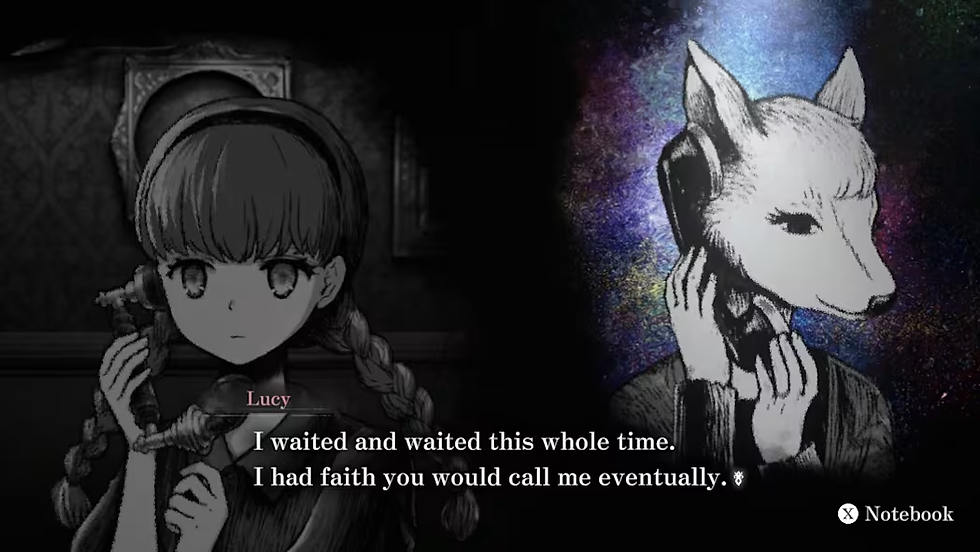
Mary’s role is deceptively simple: listen, guide, and help callers confront the truths they’ve avoided. The notebook becomes your anchor, filling with sketches, clues, and emotional threads that tie each case together. The game’s strongest moments come when a caller reveals something raw, an estranged sibling, a buried memory, a confession they never thought they’d make. These scenes land with surprising weight, and the writing gives each character enough space to feel real rather than symbolic.
One of the most affecting calls comes from a man who hasn’t spoken to his sibling in years. His voice wavers between defensiveness and longing, and as you guide him through the conversation, you feel the weight of everything left unsaid. It’s a story about pride, fear, and the tiny fractures that become chasms over time. Helping him find the courage to reach out is one of the game’s most cathartic moments.

Another standout is a researcher who chose work over relationships, convinced he’d have time to fix things later. His call is clinical at first, almost detached, but cracks appear as he admits what he sacrificed. His regret feels painfully familiar, especially for players who’ve chased ambition at the expense of connection. The game doesn’t judge him; it simply lets him speak.
There’s a heartbreaking conversation with a teenager who’s terrified and unprepared for the end. Their fear is raw, unfiltered, and the way Mary gently guides them through their panic is one of the game’s most human moments. It’s a reminder that the apocalypse isn’t poetic, it’s messy, unfair, and indiscriminate.
The overarching mystery of the world’s end is intentionally vague, but the emotional throughline is clear: even in the final seconds, people want to be understood.

Schrödinger’s Call is mechanically light, but purposeful. You flip through your notebook, dial numbers, follow conversational leads, and make choices that shape the tone of each interaction. The choices rarely branch the story in dramatic ways, but they do influence how characters open up to you. It’s more about emotional navigation than consequence.
The art direction is striking: monochrome palettes, pencil‑style illustrations, and surreal visual flourishes that punctuate emotional peaks. The Switch’s screen makes these contrasts pop, especially in handheld mode. Performance is smooth, with clean UI navigation and no noticeable technical issues. The game’s structure with short, self‑contained chapters fits the Switch perfectly.

Pros
Beautiful, emotionally resonant story
Distinctive art direction with memorable visual moments
Haunting soundtrack and expressive voice effects
Perfectly suited to handheld play
Thoughtful, intimate character writing
Cons
Limited player agency and minimal branching
Some dialogue sequences feel repetitive
Slow pacing may not suit all players
Schrödinger’s Call is a quiet, affecting visual novel that thrives on empathy rather than spectacle. On Nintendo Switch, it becomes an even more intimate experience and one that invites you to slow down, listen, and sit with the fragile humanity of its callers. If you enjoy narrative‑driven games that prioritise mood, character, and emotional truth, this is a standout.
XPN Rating: 4 out of 5 (GOLD)

Schrödinger’s Call is available now!


Comments