
Perfect Tides: Station to Station - Nintendo Switch Review


Perfect Tides: Station to Station is one of those rare narrative games that doesn’t just tell a coming‑of‑age story. Set in 2003 and following 18‑year‑old Mara Whitefish through her freshman year of college, the game captures the messy, exhilarating, painful, and transformative process of becoming a person with a clarity that feels almost unnervingly real. On Nintendo Switch, that intimacy translates beautifully. The handheld format makes Mara’s world feel even closer, like you’re carrying her anxieties, hopes, and half‑finished essays around with you.
The game’s structure is deceptively simple: a point‑and‑click adventure where you guide Mara through classes, friendships, creative breakthroughs, heartbreaks, and the everyday rituals of early adulthood. But the simplicity is a mask. Underneath is a deeply layered narrative system that tracks Mara’s knowledge, emotional state, and relationships, letting her growth unfold through the choices you make and the experiences you seek out. Writing assignments become a kind of emotional barometer, your essays improve not because you “level up,” but because Mara genuinely learns, reads, listens, and lives. It’s one of the most grounded uses of a writing mechanic in games, and it makes her creative journey feel tactile and earned.
What stands out most is how sharply the game understands the emotional volatility of being 18. Mara’s self‑talk swings between self‑loathing and fragile confidence; her relationships burn bright, collapse suddenly, and leave her reeling; her sense of identity shifts with every book she reads or conversation she stumbles into. The game doesn’t shy away from depicting toxic dynamics, especially in one early sequence that gamifies an emotionally manipulative breakup with a heart‑meter that drains as Mara’s resolve falters. It’s uncomfortable, raw, and brilliantly designed, one of several moments where the game uses mechanics to make you feel what Mara feels rather than simply observe it.
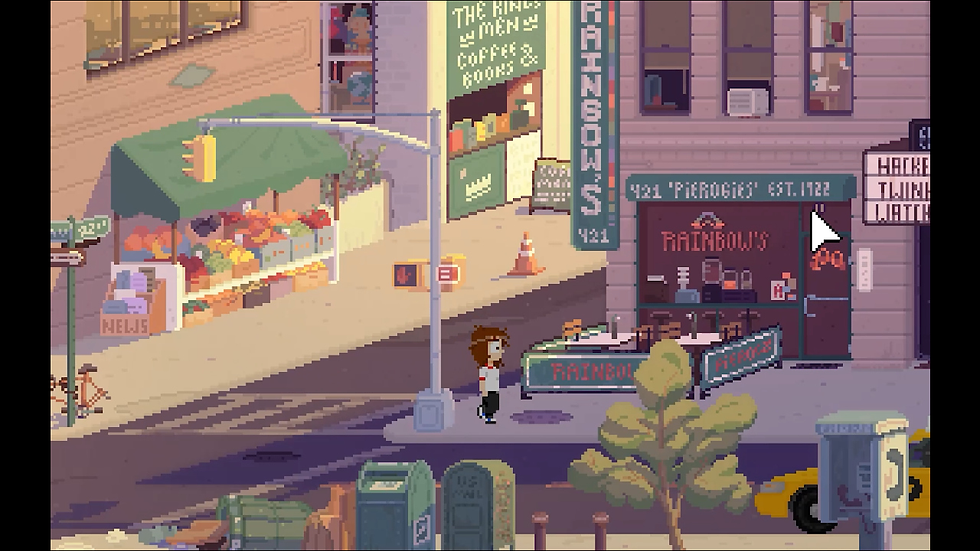
Visually, Station to Station is a love letter to pixel art storytelling. The city streets, cramped apartments, libraries, diners, and rooftop hangouts are rendered with a richness that makes them feel lived‑in, grimy, and warm all at once. Character animations swing between expressive pixel sprites and charmingly rough, early‑2000s‑internet‑style close‑ups that fit the era perfectly. The Switch handles all of this cleanly, and the art style shines on the OLED screen in particular. The soundtrack, a mix of nostalgic synths and gentle ambient tracks, wraps the whole experience in a soft emotional haze, never intrusive, always evocative.

The pacing is deliberate, sometimes even languid, but that’s part of the point. A year in someone’s life isn’t a sprint; it’s a series of small choices, missed opportunities, late‑night conversations, and fleeting highs. The game captures that rhythm with remarkable honesty. Some days feel full and electric; others slip away with nothing accomplished but a half‑hearted attempt at an essay or a quiet moment on a train ride home. The Switch’s pick‑up‑and‑put‑down nature makes this pacing feel natural, almost cozy.
If there’s a flaw, it’s that the ending lands with a softer thud than expected, however not because it’s poorly written, but because it intentionally resists the neatness of a traditional narrative arc. Mara’s life doesn’t resolve; it simply continues. That lack of closure is thematically appropriate, but it may leave some players wanting a more defined emotional landing.
Still, Station to Station is a triumph of character‑driven storytelling. It’s tender, funny, painfully relatable, and unafraid to dig into the uglier corners of growing up. On Switch, it becomes an even more intimate experience and one that feels like reading a beloved diary or revisiting a version of yourself you’d half forgotten. It’s a game that lingers, not because of its mechanics or puzzles, but because Mara feels like someone you knew, or someone you were, or someone you’re still becoming.

Pros
Deeply authentic coming‑of‑age writing that captures the emotional messiness of early adulthood
Brilliant use of mechanics to express Mara’s internal state and creative growth
Gorgeous pixel‑art environments that feel warm, nostalgic, and lived‑in
Perfect fit for handheld play, enhancing the intimacy of the story
Strong sense of time and place, especially for early‑2000s digital culture
A tender, emotionally resonant soundtrack that supports the narrative without overwhelming it
Cons
Deliberate pacing may feel slow for players expecting more traditional adventure‑game structure
Ending is intentionally understated, which may leave some wanting a stronger emotional crescendo
Occasional navigation friction inherent to point‑and‑click design on a controller

Perfect Tides: Station to Station is a rare, vulnerable, beautifully observed story about becoming a person, not the idealized version you imagine at 18, but the real one shaped by mistakes, heartbreaks, friendships, and the slow accumulation of lived experience. On Nintendo Switch, the game becomes even more intimate, almost diary‑like, as if you’re paging through someone’s memories rather than playing through a scripted narrative. It’s tender, funny, painfully relatable, and unafraid to sit in the uncomfortable spaces most games gloss over. If you’re drawn to character‑driven storytelling, emotionally textured writing, and games that linger long after the credits, this is something special.
XPN Rating: 4.5 out of 5 (GOLD)

Perfect Tides: Station to Station is available now!


Comments