
Resident Evil (2026) Review


For decades, Resident Evil has been one of gaming's most iconic horror franchises, yet its journey to the big screen has often been a rocky one. Thankfully, Resident Evil (2026) finally breaks the curse. Directed by Zach Cregger, the filmmaker behind Barbarian, this latest reboot abandons the bombastic action-heavy approach of earlier adaptations and instead embraces pure survival horror. The result is a tense, atmospheric, and frequently terrifying film that feels closer to the spirit of Capcom's beloved games than any previous live-action outing.
Rather than focusing on super soldiers or globe-trotting heroes, the story follows Bryan Hodukavich, a medical courier whose life is already complicated before the outbreak begins. During what should have been a routine overnight delivery, Bryan finds himself drawn into a nightmare when he accidentally strikes a mysterious woman on a deserted road outside Raccoon City. It is a simple setup, but one that immediately establishes the film's greatest strength: its protagonist is a completely ordinary person caught in an extraordinary disaster.

The plot gradually spirals from a roadside accident into a full-scale battle for survival. After attempting to help the injured woman, Bryan discovers that something is horrifyingly wrong. Encounters with local law enforcement quickly descend into chaos as signs of a rapidly spreading infection begin to emerge. Isolated from the outside world and surrounded by increasingly disturbing events, Bryan is forced to navigate a community that is collapsing in real time.
What makes the story particularly effective is its focus on vulnerability. Bryan is not a soldier, a secret agent, or a trained survivor. He spends much of the film scared, confused, and desperately trying to stay alive. This creates a constant sense of tension because there is no guarantee he will have the skills or resources needed to escape each new threat. Every dark corridor, abandoned building, and desperate encounter feels genuinely dangerous as a result.
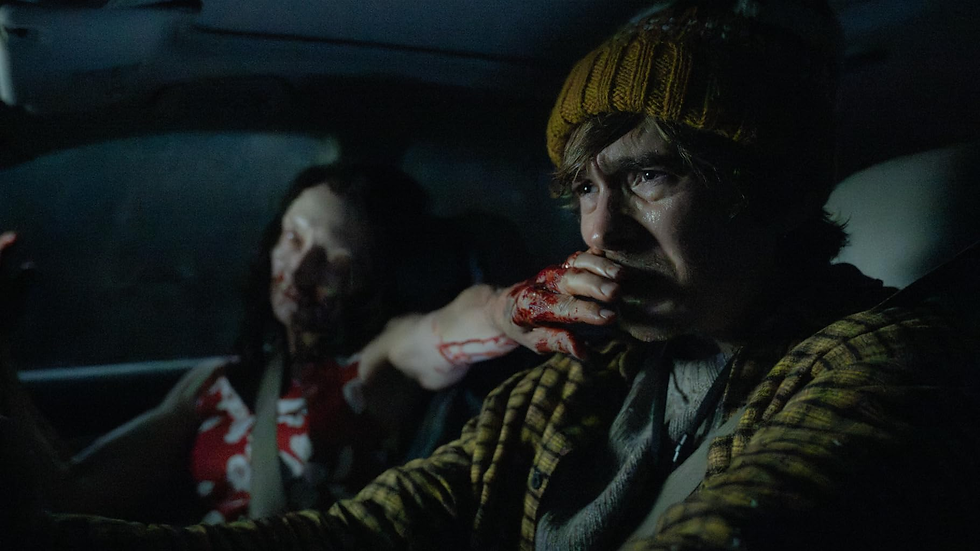
As the night progresses, Bryan encounters other survivors, some willing to cooperate and others willing to do anything necessary to save themselves. The film explores how quickly society can unravel under pressure, with fear and desperation proving almost as dangerous as the infected creatures lurking throughout the city. While the narrative remains tightly focused on survival, it also teases the larger conspiracy and biological horrors that longtime Resident Evil fans will instantly recognise.
One of the film's smartest decisions is resisting the urge to overload the audience with exposition. The mystery behind the outbreak unfolds naturally through Bryan's experiences, allowing the horror to remain front and centre. Familiar themes involving corporate recklessness, scientific experimentation, and humanity's inability to control its own creations are present throughout, but they never overshadow the immediate struggle to stay alive.

The survival horror atmosphere is where the film truly shines. Zach Cregger demonstrates a remarkable understanding of suspense, creating lengthy sequences of unbearable tension that often prove more frightening than the inevitable bursts of violence. The infected creatures are grotesque and unsettling, while the body horror elements are every bit as disturbing as fans would hope. The film constantly keeps viewers on edge, making even quiet moments feel threatening.
Leading the cast, Austin Abrams delivers an impressive performance as Bryan. His portrayal feels authentic because he never comes across as an action hero. Instead, he embodies the fear, exhaustion, and desperation of someone struggling to survive impossible circumstances. Supporting performances from Zach Cherry, Kali Reis, and Paul Walter Hauser help flesh out the world, even if some secondary characters could have benefited from additional development.
Visually, the film strikes a pleasing balance between grounded realism and nightmarish horror. The practical creature effects are especially effective, helping to create some genuinely memorable monster encounters. Combined with the film's brisk 94-minute runtime, the story maintains an almost relentless pace, rarely allowing audiences a chance to relax before the next terrifying encounter arrives.

Pros
Excellent atmosphere and suspense
Strong lead performance from Austin Abrams
Successfully captures the spirit of survival horror
Disturbing creature design and body horror
Tight pacing with very little filler
Cons
Supporting cast could have been explored further
Some story threads feel underdeveloped
Fans seeking a direct adaptation of a specific game may be disappointed

Resident Evil (2026) succeeds because it understands that fear, vulnerability, and survival are the foundation of the franchise. Rather than attempting to reinvent the series as another action blockbuster, Zach Cregger delivers a focused horror experience that respects what made the games so compelling in the first place. The result is a tense, atmospheric, and genuinely frightening reboot that stands as one of the strongest video game adaptations in years.
XPN Rating: 4 out of 5 (GOLD)


Comments