
Mirage 7 - Review - Xbox
- XPN Network

- Mar 14
- 3 min read
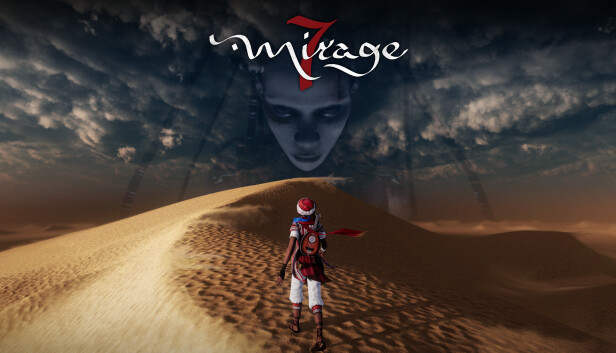
Mirage 7, developed by Drakkar Dev and published by Blowfish Studios, starts off in a pretty unassuming way: you’re wandering across a massive desert as Nadira, trying to make sense of a world that feels part ancient myth, part forgotten sci‑fi experiment. It’s an adventure‑puzzle game at heart, one where you’re poking around ruins, solving environmental riddles, and slowly piecing together a story that’s bigger than it first appears. There’s no dramatic intro or flashy set‑piece to pull you in; instead, the game relies on its atmosphere, its strange mix of folklore and technology, and the simple charm of exploring the sand‑swept world with your lizard companion, Jiji, leading the way. It’s a bit scrappy, a bit old‑school, but immediately intriguing in that “alright, what’s actually going on here?” kind of way.
You play as Nadira, a young woman driven by grief and hope as she searches for Princess Taishma, a figure of legend said to possess the power to bring back the dead. Her only companion is Jiji, a small lizard whose presence becomes unexpectedly central to the experience. Jiji’s “lizard sight” reveals hidden clues and resources, and the sections where you directly control him and are scuttling through tight spaces, hunting scorpions, or guarding Nadira while she rests adds some warmth to the journey. Their bond becomes the emotional anchor of the game, grounding the story even when the world around them grows stranger.
Exploration is where Mirage 7 finds its rhythm. The desert is sparse, dotted with ruins, temples, and underground structures that feel like relics from different eras stitched together. The game leans heavily into puzzle‑driven progression, and when these puzzles land, they evoke the layered, interconnected design of early adventure titles. Mechanisms must be activated in the right order, tools crafted to bypass hazards, and environmental clues pieced together with care.

But the puzzle logic can be uneven. Some solutions feel intuitive and satisfying, while others hinge on mechanics introduced once and never used again. Jiji’s vision helps, but it can also mask unclear design, making certain steps feel more like trial and error than discovery. Still, the overall flow of exploration remains engaging, especially as the game begins weaving in its sci‑fi elements: crashed drones, sterile corridors beneath the sand, and visions of a woman entangled in machinery. These moments create a compelling contrast with the mythic surface world, hinting at a larger story that the game only partially reveals.
Combat, unfortunately, never reaches the same level of ambition. Encounters are frequent enough but are rarely enjoyable. Melee attacks feel stiff, dodging lacks precision, and enemies often absorb more hits than the system can comfortably support. The slingshot offers some tactical variety, but its usefulness is limited by contextual restrictions and awkward switching. Enemy designs from giant insects to spectral figures are pretty imaginative, yet the mechanics don’t give them room to shine. Combat becomes something you push through to return to the puzzles and exploration that form the game’s real strengths.

Visually, Mirage 7 embraces a retro aesthetic as character models are simple, animations stiff, and lighting occasionally stark, but there’s a charm to the presentation. The desert landscapes glow with warm, painterly tones, and the temples have a blocky, nostalgic solidity that recalls adventure games from almost two decades ago. It’s not technically impressive, but it has personality and a handmade quality that suits the game’s tone. Technical issues, however, are harder to overlook. Crashes, clipping, and occasional progression bugs can disrupt the experience, especially in later chapters where the difficulty ramps up.
Narratively, the game sets up a fascinating blend of myth and machinery, but it doesn’t fully explore the ideas it introduces. The story moves briskly, sometimes too much so, and the ending arrives before the world’s deeper mysteries have time to settle. There’s a sense that Mirage 7 is reaching for something bigger with a commentary on belief, memory, and the stories we cling to, but the threads never quite weave together. Even so, the emotional core between Nadira and Jiji gives the journey a little sincerity.

Pros
Evocative blend of mythic fantasy and subtle sci‑fi
Jiji is a charming, memorable companion
Strong sense of atmosphere and worldbuilding
Puzzle‑driven exploration with nostalgic appeal
Distinctive retro aesthetic
Cons
Combat is clunky and repetitive
Puzzle logic can be inconsistent
Technical issues and crashes
Stiff animations and dated visuals
Story ends abruptly without fully exploring its themes

Mirage 7 is a flawed but distinctive adventure, the kind of game that feels shaped by passion more than polish. Its puzzles, atmosphere, and mythic tone create moments of genuine immersion, even as its combat and technical issues hold it back. For players who enjoy atmospheric, puzzle‑driven adventures with a retro soul, there’s something here worth discovering. For those seeking refined mechanics or modern production values, the desert may feel harsher.
XPN Rating: 3 out of 5 (SILVER)

Mirage 7 is available now!


Comments